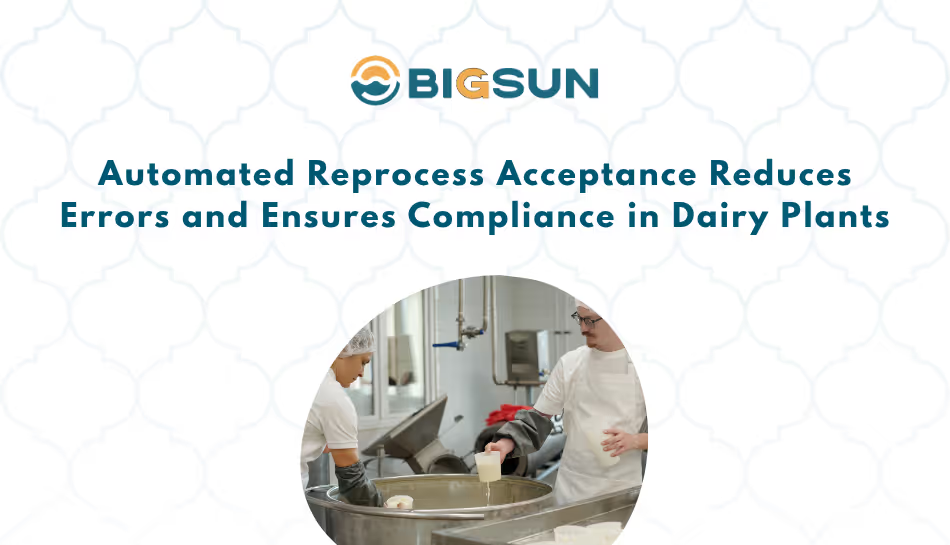
In dairy manufacturing, not every batch goes perfectly the first time. Variations in fat, SNF, or processing conditions often require reprocessing or re-standardization. The challenge is not the reprocess itself... it’s how it’s handled.
When approvals and adjustments are managed manually, the risk of errors, inconsistencies, and compliance issues increases. That’s where automated reprocess acceptance makes a real difference.
Why It Matters
Food safety in the dairy industry depends on strict control over every batch. Any deviation must be properly validated, recorded, and approved.
Manual processes often lead to:
- Untracked adjustments in batching
- Irregular quality control procedures
- No traceable audit history
- Higher chance of failing to meet compliance standards
Ensuring the safety of dairy products requires a system that enforces rules automatically, not one that relies on manual oversight.
What Is Automated Reprocess Acceptance?
Automated dairy reprocess acceptance is a system-driven approach where any reprocessing or batch re-standardization is validated and approved within your ERP.
Instead of manual overrides, the system:
- Checks if reprocessing meets predefined quality parameters
- Validates fat and SNF levels before approval
- Upholds compliance with organizational and regulatory requirements
- Logs every action digitally for traceability
This creates a controlled, transparent workflow for handling batch adjustments.
How Automation Reduces Errors
Automation removes the uncertainty and risks associated with manual handling.
1. Eliminating Manual Override Errors
In traditional setups, operators may override system rules to speed up processes. Automated validation for milk re standardization prevents unauthorized changes.
2. Consistent Quality Checks
Every batch goes through the same validation logic, ensuring uniform quality across production.
3. Real-Time Validation
The system checks parameters instantly before allowing reprocess acceptance, reducing the chances of defective output.
4. Controlled Workflows
Approvals are routed through predefined workflows, ensuring accountability at every stage.
Ensuring Compliance and Audit Readiness
Compliance is not just about meeting standards, it’s about proving it.
Digital reprocess logs for dairy food safety audits ensure that:
- Every reprocess action is recorded with time stamps
- Changes are fully traceable from start to finish
- Audit reports can be generated instantly
- Ongoing adherence to regulatory requirements is ensured
This level of transparency is critical for maintaining milk quality compliance and passing inspections without stress.
Key Features to Look For
If you are evaluating systems for batch re standardization automation, look for:
- Automated validation rules for reprocessing
- Integration with quality testing and lab systems
- Digitized tracking logs and audit records
- Workflow-based approvals
- Automated alerts for non-compliant activities
These features ensure your system supports both operational efficiency and regulatory compliance.
Top Solutions for Automated Reprocess Management
Here are some widely used options:
5. Basic Manufacturing Software
Supports simple tracking, but lacks automation and compliance controls.
4. Tally ERP with Custom Workflows
Can handle basic processes, though requires customization for advanced validation.
3. SAP Business One
Offers strong ERP capabilities with configurable workflows for manufacturing.
2. Oracle NetSuite
Provides advanced automation, compliance tracking, and real-time monitoring.
1. Bigsun ERP
Designed for dairy operations, Bigsun ERP enables automated dairy reprocess acceptance with built-in validation rules, digital logs, and seamless dairy ERP integration. Eliminates human override errors in dairy batching, ensuring complete compliance with food safety requirements.
Advantages of Automated Reprocess Acceptance
- Reduced errors in batch adjustments
- Improved consistency in product quality
- Reinforced compliance measures and audit readiness
- More efficient and better-managed workflows
- Strengthened transparency in operational workflows
Final Thoughts
Reprocessing is a normal part of dairy manufacturing... but handling it manually introduces unnecessary risk.
By automating reprocess acceptance, dairy plants can ensure every adjustment is validated, recorded, and compliant. The result is not just better efficiency, but stronger control over quality and food safety.
In an industry where precision matters, automation is the key to getting it right every time.

