
How AI-Powered ERP Is Changing Manufacturing Management
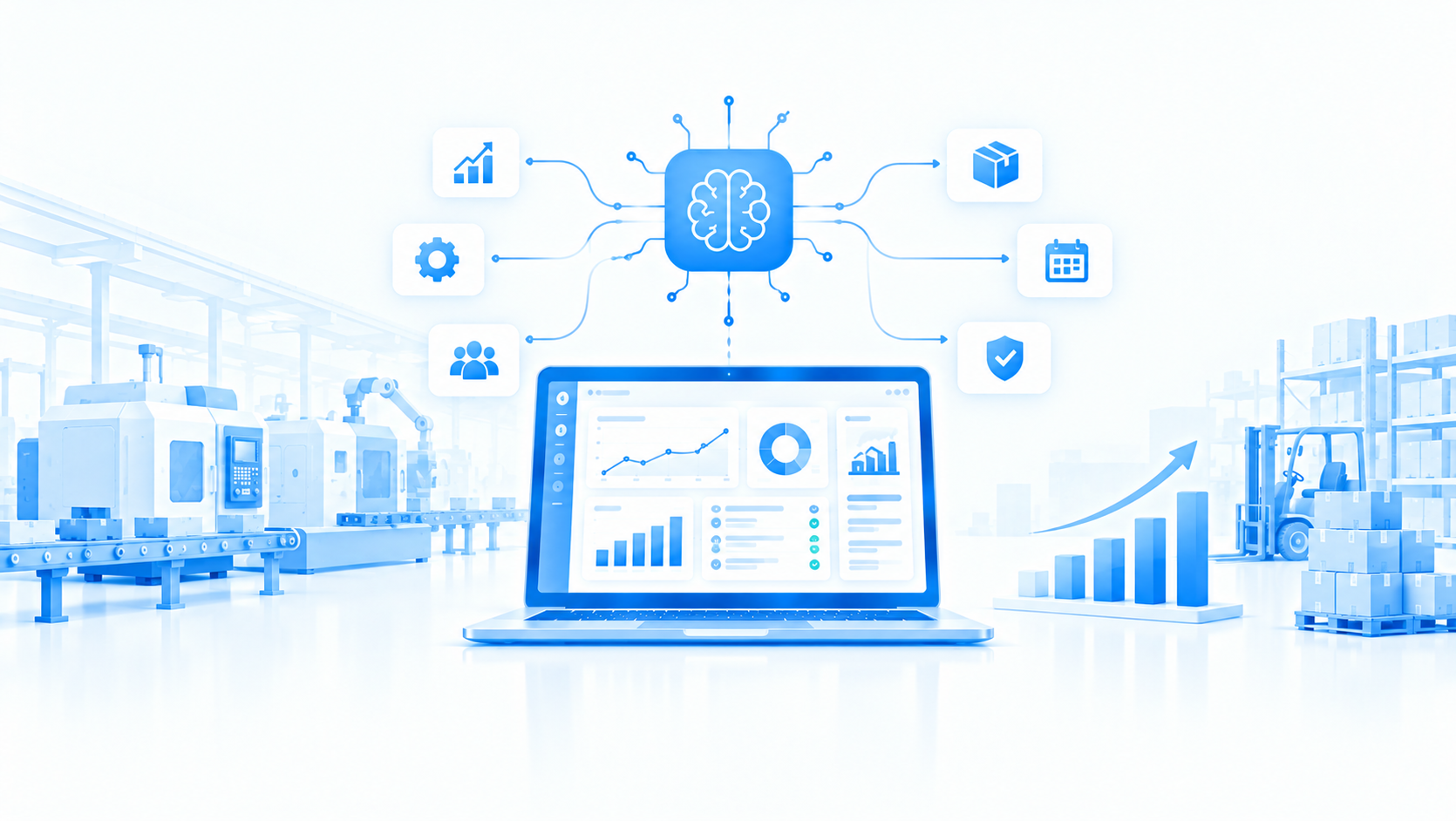
Imagine running a factory where the production team needs more raw materials, the warehouse is running low on stock, and a customer is asking when an order will be ready. If each department uses separate records and outdated information, bringing everything together can become a daily struggle.
This is where ERP software comes in. It helps businesses manage important activities such as inventory, purchasing, production, and finances in one place. Now, artificial intelligence (AI) is making these systems even more useful.
AI-powered ERP for manufacturing helps businesses understand their operations, spot potential problems, and make better decisions. Let's explore how this technology is changing the way manufacturers manage their businesses.
What Is AI-Powered ERP?
ERP stands for Enterprise Resource Planning. In simple terms, it is software that helps a business manage different departments through a connected system.
For a manufacturer, this might include tracking raw materials, planning production, managing employee schedules, processing orders, and monitoring costs.
An AI-powered ERP system adds artificial intelligence to these everyday tasks. It can analyze business information, identify patterns, make predictions, and suggest actions.
For example, instead of simply showing that raw materials are running low, an AI-enabled system might estimate when more supplies will be needed based on previous usage and upcoming orders.
This helps manufacturers move beyond recording what has happened and towards planning what might happen next.
How AI Is Changing Manufacturing Management
1. Making Production Planning Easier
Manufacturing schedules can change quickly. A customer might place an urgent order, a machine might need repairs, or a delivery of raw materials might arrive late.
AI ERP for manufacturing can analyze order details, available materials, production capacity, and previous performance to help managers create more realistic schedules.
This makes it easier to identify possible delays and adjust plans before they disrupt the entire production line.
2. Keeping Better Track of Inventory
Having too much stock ties up money, while having too little can bring production to a halt.
AI-driven ERP software can study past sales, material usage, and upcoming orders to estimate how much inventory a business may need.
For example, if a manufacturer regularly uses more packaging materials during certain months, the system can help managers prepare in advance.
These estimates are not always perfect, but they can make inventory planning more informed and reduce avoidable shortages.
3. Helping Managers Make Faster Decisions
Manufacturers deal with information from many areas of the business. Finding the right details in lengthy reports can take time.
An intelligent ERP for manufacturing can help summarize information, highlight unusual changes, and answer questions about business performance.
A manager might want to know why production costs have increased or which orders are at risk of being delayed. AI features may help identify relevant records and point towards possible explanations.
Managers can then investigate the findings and decide what action to take.
4. Predicting Maintenance Needs
Unexpected machine breakdowns can delay orders and increase repair costs.
When connected to suitable machine data, an AI-based ERP system can work alongside predictive maintenance tools to help identify equipment that may need attention.
For instance, maintenance records and sensor readings might reveal that a machine has been showing warning signs before previous failures. This information helps teams plan inspections and repairs more effectively.
The system's ability to do this depends on the data and maintenance features available.
5. Improving Coordination Between Departments
In many factories, departments depend on one another. Purchasing needs to know what production requires, while sales needs accurate delivery information.
AI-powered manufacturing software can help connect information across these departments, making it easier to coordinate activities.
When everyone works with more consistent information, businesses can reduce confusion, respond to changes faster, and keep orders moving.
Key Benefits of AI ERP for Manufacturing
AI-powered ERP can offer several practical advantages:
- Better planning: Managers can make decisions using forecasts and current business data.
- Lower inventory costs: Improved demand estimates can help avoid unnecessary stock.
- Fewer delays: Potential production and supply problems can be identified earlier.
- Greater visibility: Teams can understand what is happening across the business.
- Improved efficiency: Automating routine tasks gives employees more time for important work.
How Manufacturers Can Get Started
Manufacturers should begin by identifying a business problem, such as inventory shortages, production delays, or time-consuming reporting.
They can then assess whether their existing ERP software offers AI features or whether an upgrade would be useful. Before investing, businesses should check integration requirements, data quality, employee training needs, and overall costs.
Starting with one area allows manufacturers to test the benefits before expanding AI capabilities across the organization.
Final Thoughts
Managing a manufacturing business involves coordinating people, machines, materials, and customer orders. When information is scattered or outdated, even simple decisions can become difficult.
AI-powered ERP brings another level of intelligence to business management by helping manufacturers plan ahead, recognize problems, and make better use of their resources.
It is not a replacement for experienced managers, but it can give them clearer information and more time to focus on important decisions. For manufacturers looking to improve coordination and run their operations more smoothly, AI-enabled ERP is worth exploring.