How ERP Integrates with MES to Improve Production Efficiency
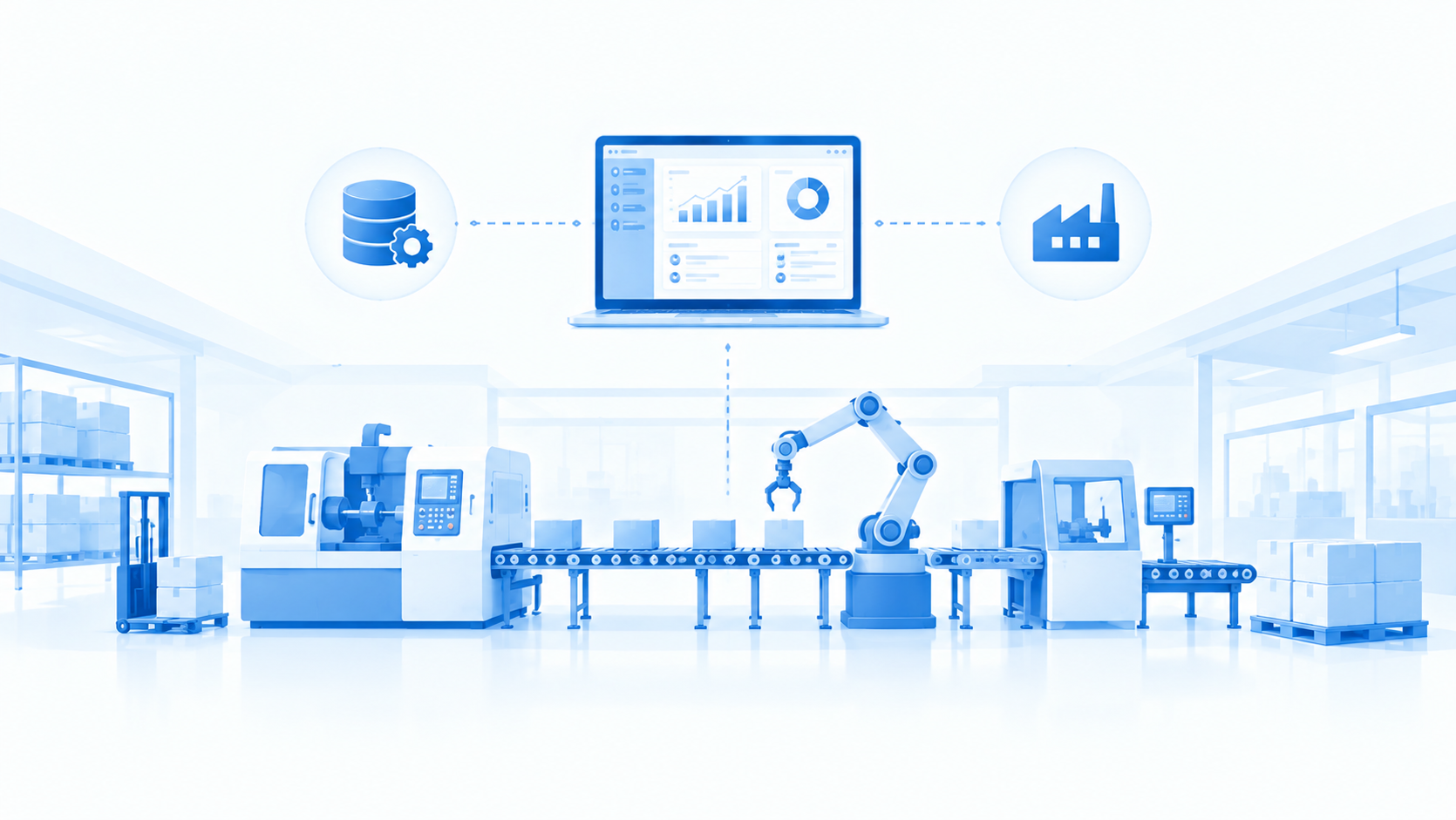
Manufacturing businesses rely on both strategic planning and efficient execution. An ERP system may manage production orders, inventory, purchasing, and business resources, while a Manufacturing Execution System (MES) focuses on what is happening directly on the shop floor.
When these systems operate separately, important information can become fragmented. Production teams may not have the latest order information, while management may lack real-time visibility into factory performance.
This is why ERP and MES integration is becoming increasingly important. By connecting business planning with shop floor execution, manufacturers can improve visibility, reduce delays, and make production more efficient.
What Is ERP and MES Integration?
ERP systems manage broader business processes such as sales orders, purchasing, inventory, finance, and production planning.
An MES focuses more closely on production execution. It can monitor production activities, machine performance, work orders, quality checks, and operator activities.
With MES and ERP integration, information can flow between these two environments. ERP provides the business context, while MES provides detailed shop floor information.
Together, they create a more connected manufacturing operation.
1. Connects Production Planning With Execution
Production plans created in ERP need to be executed on the factory floor.
With ERP integration with manufacturing execution system technology, production orders and relevant requirements can move between planning and execution systems.
This helps production teams work with accurate information while allowing managers to understand how actual production is progressing against planned schedules.
2. Improves Real-Time Production Visibility
Traditional ERP systems may provide useful production information, but MES systems are often closer to real-time shop floor activity.
When integrated, Manufacturing ERP with MES can provide managers with better visibility into production status.
They can more easily identify whether orders are progressing as expected, where delays are occurring, and which production areas may require attention.
3. Reduces Manual Data Entry
Without integration, employees may need to enter the same information into multiple systems.
This creates additional administrative work and increases the risk of errors.
ERP MES integration software can automate the exchange of information between systems. Production data collected through MES can be shared with ERP, reducing duplicate data entry and improving information consistency.
4. Improves Inventory Accuracy
Production activities directly affect inventory. Materials are consumed during manufacturing, while finished goods are added to stock.
When ERP and MES systems are connected, production consumption and output information can be shared more efficiently.
This helps ERP software for manufacturing maintain better visibility into material usage and finished goods, supporting more accurate inventory management.
5. Helps Reduce Production Delays
Production delays can have many causes, including machine downtime, material shortages, quality problems, and scheduling issues.
MES provides detailed shop floor information, while ERP provides broader business and planning information.
Together, they can help teams understand not only that production is delayed but also how the delay may affect inventory, customer orders, and delivery commitments.
This supports faster and more informed corrective action.
6. Strengthens Quality Management
Quality information is an important part of production efficiency.
An MES can capture inspection results and production data at the shop floor level. When this information is connected with ERP, businesses can link quality results with production orders, materials, and other relevant information.
This makes it easier to identify recurring quality problems and reduce rework or scrap.
7. Supports Better Production Decisions
A connected environment gives managers a more complete view of factory operations.
With Production management ERP integrated with MES information, decision-makers can compare planned production with actual performance and investigate problems more quickly.
For example, if a production order is behind schedule, managers can review shop floor information to determine whether the cause is downtime, material availability, or another issue.
Benefits of ERP and MES Integration
Manufacturers can gain several advantages by integrating these systems:
· Better production visibility
· Reduced manual data entry
· Improved inventory accuracy
· Faster identification of production delays
· Better quality monitoring
· Improved production planning
· Reduced information silos
· Faster decision-making
· Better overall production efficiency
The key benefit is the connection between planning and execution. ERP helps determine what needs to be produced and when, while MES helps manage how production is actually carried out.
ERP and MES for Smart Manufacturing
As manufacturers adopt ERP for smart manufacturing, integration with MES can become an important part of digital transformation.
A connected environment allows businesses to combine operational data from the shop floor with information about customers, orders, inventory, procurement, and business performance.
This creates a stronger foundation for automation, analytics, and continuous improvement.
Final Thoughts
ERP and MES systems serve different but complementary purposes. ERP provides a broad view of business and production planning, while MES focuses on detailed execution and shop floor performance.
Through MES and ERP integration, manufacturers can connect these two layers and create a more consistent flow of information. This can improve production visibility, reduce manual work, support faster problem-solving, and help businesses respond more effectively to changing production conditions.
For manufacturers looking to improve efficiency and modernise their operations, integrating ERP with a Manufacturing Execution System ERP environment can help bridge the gap between business planning and factory execution, creating a more connected and responsive production operation.