
Production Automation Solutions for Manufacturing Industries
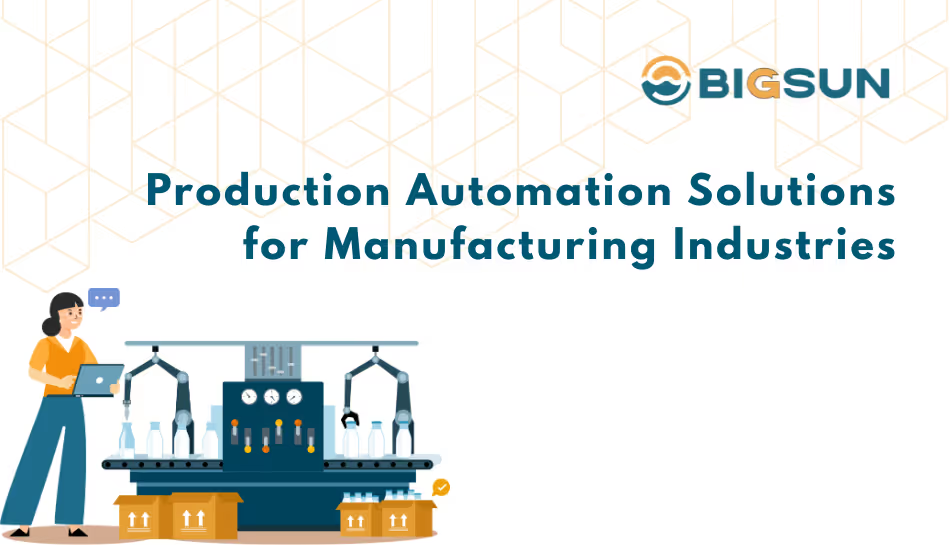
Manufacturing industries today operate in an environment where efficiency, speed, and accuracy determine success. Companies must produce high-quality products while controlling costs and meeting strict deadlines. To achieve this, many manufacturers are adopting production automation solutions that streamline operations and reduce manual intervention.
With modern production automation software, manufacturers can automate repetitive tasks, monitor production in real time, and ensure consistent output across the production line. Automation is no longer a luxury for factories. It has become an essential part of modern manufacturing operations.
What Are Production Automation Solutions?
Production automation solutions refer to technologies and software that automate manufacturing processes using digital systems, machine integrations, and data-driven workflows. These solutions help manufacturers control production lines more efficiently and reduce dependency on manual processes.
By implementing manufacturing process automation, factories can coordinate machines, operators, and materials through intelligent systems that track and manage production activities from start to finish.
Automation systems often integrate with ERP platforms to connect production planning, inventory management, and quality control into a single streamlined workflow.
Why Manufacturing Industries Are Embracing Automation
Traditional manufacturing processes often involve manual monitoring, paper-based tracking, and disconnected systems. This can lead to production delays, operational inefficiencies, and costly errors.
Implementing manufacturing automation solutions helps companies overcome these challenges by creating a more structured and data-driven production environment.
Some key reasons manufacturers adopt automation include:
- Boosting operational efficiency in production
- Reducing operational expenditure while maintaining efficiency
- Advancing product excellence
- Improving accuracy by reducing human mistakes
- Increasing real-time insight into production operations
Automation also allows businesses to scale production without dramatically increasing labor costs.
Key Features of Production Automation Software
Modern production automation software includes several features that help manufacturing industries optimize their operations.
1. Live Production Performance Monitoring
Automation platforms track machine performance, production output, and process efficiency in real time. This visibility allows managers to quickly identify bottlenecks or delays.
2. Workflow Automation
Many repetitive manufacturing tasks can be automated, including job scheduling, order tracking, and production reporting. This improves productivity and reduces manual administrative work.
3. Machine Integration
Automation systems connect directly with machines and industrial equipment to gather production data automatically. This integration helps ensure accurate tracking of production processes.
4. Data Analytics and Reporting
Automation software generates reports and insights that help manufacturers analyze performance, identify inefficiencies, and improve production planning.
5. Product Compliance and Quality Control
Automation systems help monitor product quality throughout the manufacturing process, reducing defects and ensuring consistent standards.
Custom Automated Manufacturing Solutions
Not all manufacturing facilities operate the same way. Different industries require different production processes, machinery, and workflows. That is why many organizations invest in custom automated manufacturing solutions tailored to their specific operational needs.
Custom automation can include:
- Automated manufacturing line management
- Responsive production planning
- Machine performance monitoring and analysis
- Integrated inventory and production tracking
- Real-time operational dashboards
These solutions allow manufacturers to automate complex processes while maintaining flexibility and scalability.
Role of ERP in Manufacturing Automation
While standalone automation systems can improve individual processes, the greatest efficiency is achieved when automation integrates with ERP platforms.
An ERP system connects production automation solutions with inventory, procurement, finance, and supply chain management. This integration ensures that production planning aligns with available materials, workforce availability, and customer demand.
For example, ERP-driven automation can automatically adjust production schedules when new orders are received or when raw material availability changes.
Solutions like Bigsun ERP support manufacturing process automation by linking production planning, scheduling, and inventory management into one integrated platform. This helps manufacturers maintain full visibility over operations while reducing manual coordination between departments.
Final Thoughts
Automation is transforming manufacturing industries around the world. Companies that adopt modern production automation software gain the ability to improve efficiency, reduce errors, and respond faster to market demand.
By implementing reliable manufacturing automation solutions and integrating them with ERP systems, manufacturers can create smarter production environments that support long-term growth.
As manufacturing continues to evolve toward digital and automated operations, investing in strong production automation solutions will be key to staying competitive and maintaining operational excellence.