
AI for Root Cause Analysis in Manufacturing
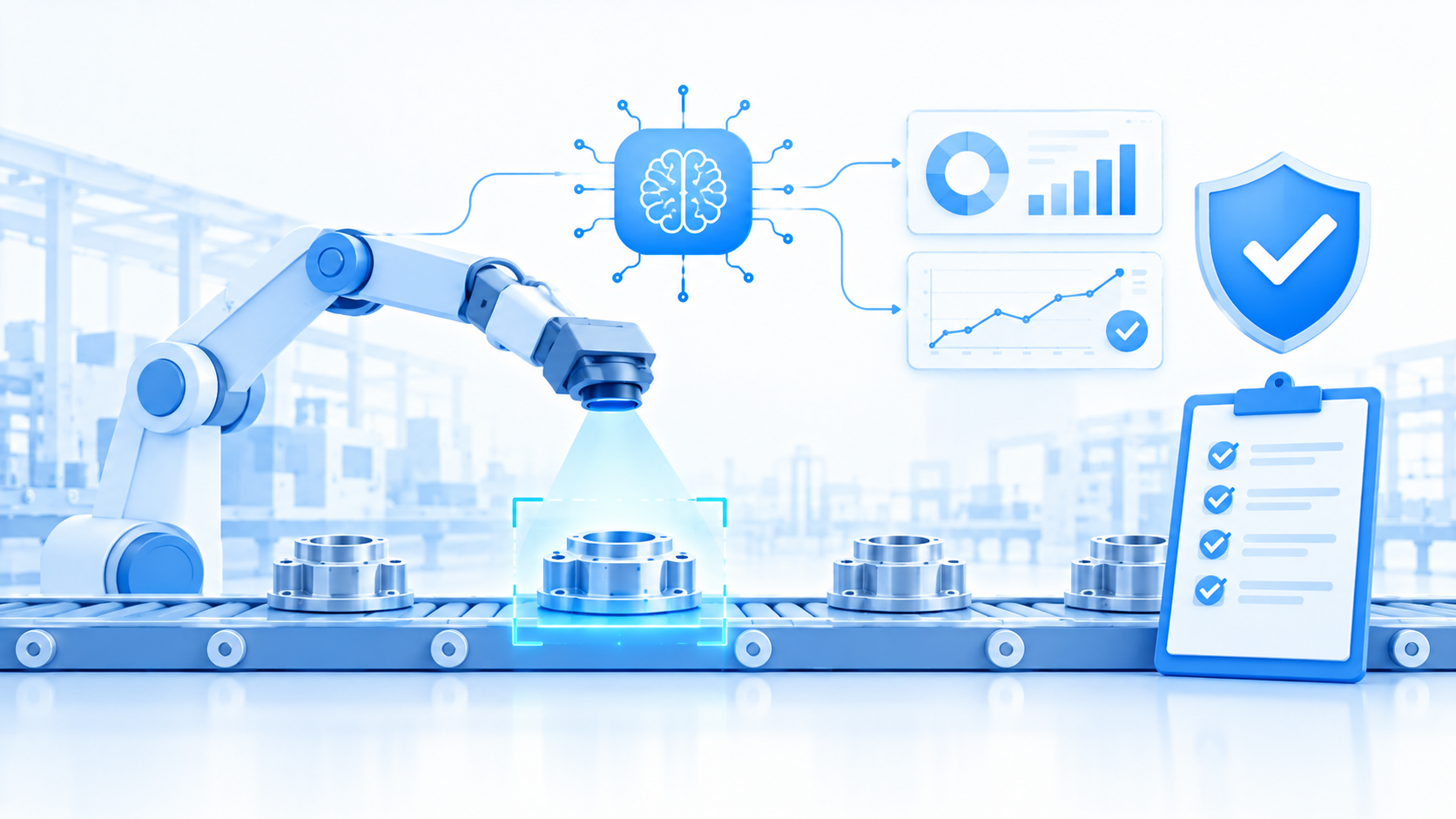
Imagine a factory where the same machine keeps breaking down every few days. The maintenance team repairs it, production resumes, and everyone gets back to work. But a few days later, the machine stops again. Sound familiar?
The problem may not be the repair itself. It could be something deeper that nobody has identified yet.
This is where root cause analysis becomes important. Instead of simply fixing a problem, it helps manufacturers understand why it happened in the first place. Artificial intelligence (AI) is making this process easier by helping teams find patterns, connect information, and identify possible causes faster.
Let's explore how AI for root cause analysis in manufacturing works and why it matters.
What Is Root Cause Analysis in Manufacturing?
Root cause analysis is the process of finding the underlying reason a problem occurs.
For example, if a machine keeps producing faulty parts, the obvious solution might be to adjust the machine each time. However, the real cause could be a worn-out component, incorrect settings, or inconsistent raw materials.
Fixing the immediate problem may help temporarily, but identifying the root cause can prevent it from happening again.
Traditional root cause analysis often relies on employee experience, manual inspections, and production records. AI-powered root cause analysis adds another layer by examining large amounts of information to uncover patterns that might otherwise be difficult to spot.
How AI Helps Manufacturers Find the Real Cause
1. Finding Patterns in Production Data
Manufacturing problems rarely happen without some warning signs. A machine might gradually become hotter, production speed might change, or defects might increase during certain shifts.
AI manufacturing analytics can examine information from machines, sensors, inspection reports, and maintenance records to identify patterns linked to these problems.
For instance, AI might reveal that product defects tend to increase whenever a particular machine operates above a certain temperature. This gives the team a useful starting point for investigating the issue.
2. Connecting Information From Different Sources
Sometimes, the answer is hidden across several different records.
A machine log might show a temperature increase, while a quality report records more defective products around the same time. Looking at these records separately may not reveal much.
AI can help bring this information together and highlight possible connections. This makes it easier for workers to investigate whether different events are related.
However, a pattern does not automatically prove that one event caused another. Teams still need to verify the findings.
3. Investigating Repeated Machine Failures
When the same machine breaks down repeatedly, maintenance teams can spend hours trying different repairs.
AI can compare previous breakdowns, repair histories, operating conditions, and sensor readings to identify similarities between incidents.
For example, it may highlight that several failures occurred after a particular component showed unusual vibration. Technicians can then inspect that component instead of starting the investigation from scratch.
This can save time and help teams focus on the most likely explanations.
4. Understanding Why Product Defects Occur
AI for industrial problem solving can also help manufacturers investigate quality issues.
Suppose a factory notices that some products have uneven surfaces. AI can compare inspection results with machine settings, material batches, and production conditions to identify factors associated with the defects.
The findings can help quality teams decide what to inspect or test next. Once the actual cause is confirmed, manufacturers can make changes to reduce the chances of the same defect returning. To see how AI also supports day-to-day inspection, read our guide to AI-powered quality management for manufacturers.
Key Benefits of AI-Powered Root Cause Analysis
AI offers several practical advantages for manufacturing businesses:
- Faster investigations: Teams can identify promising leads without manually reviewing every record.
- Fewer repeat problems: Addressing underlying causes helps prevent recurring failures.
- Reduced downtime: Faster troubleshooting can help machines return to service sooner.
- Lower costs: Fewer repeated repairs and defective products can reduce unnecessary spending.
- Better decisions: Teams can use evidence from production data rather than relying only on guesswork.
How Manufacturers Can Get Started
Businesses can begin by choosing a recurring problem, such as frequent machine failures, repeated defects, or unexpected production delays.
They can then gather relevant maintenance records, inspection reports, and machine data. An AI solution can analyze this information and highlight patterns for the team to investigate. A manufacturing ERP system can help keep production, maintenance, and quality records in one place, which makes this data easier to collect.
Starting with one problem makes it easier to evaluate the results before expanding to other production areas. Employees should also be involved because their practical experience helps verify whether AI-generated explanations make sense.
Final Thoughts
Repeated manufacturing problems can waste time, increase costs, and disrupt production. Simply fixing the visible issue may not be enough if the underlying cause remains.
AI for root cause analysis in manufacturing helps businesses examine information more efficiently, uncover patterns, and investigate problems with greater clarity.
AI cannot automatically guarantee the correct answer, but it can help workers ask better questions and find useful evidence faster. By combining AI-driven insights with human experience, manufacturers can solve problems more effectively and build more reliable production processes. Businesses planning this kind of data-driven approach can also explore Bigsun's ERP software.