
How Depreciation Works for Fixed Assets
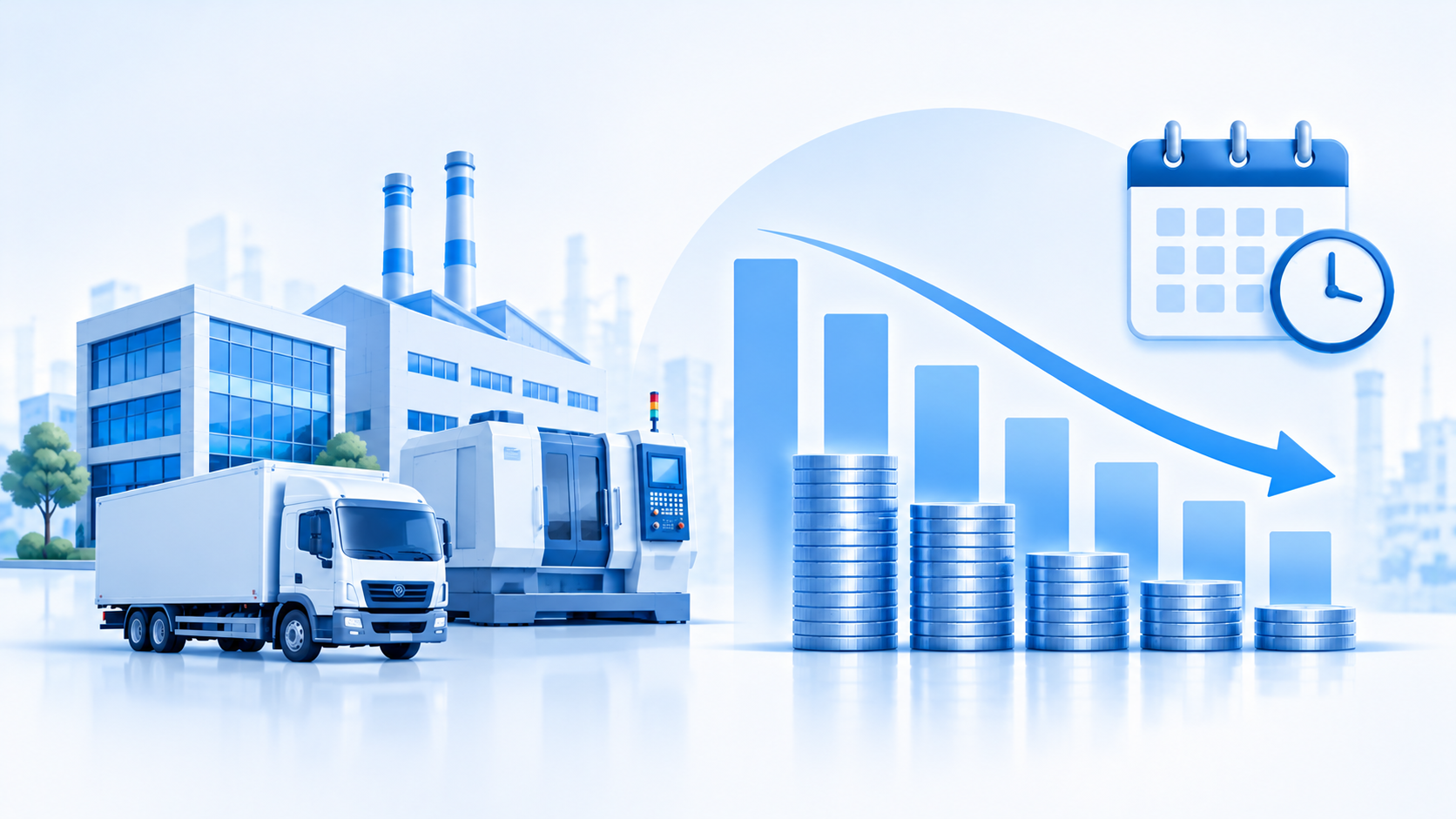
A company buys a new machine for ₹10 lakh. It uses that machine every day for years, but its value does not stay the same. Parts wear out, technology becomes outdated, and eventually the machine will not be worth what the company originally paid for it.
Accounting reflects this through depreciation. Instead of treating the entire cost of a long-term asset as an expense in the year it is bought, a business spreads that cost over the years it expects to use the asset. This guide explains how depreciation of fixed assets works, how it is calculated, and how to keep the records behind it accurate.
What Is Depreciation of Fixed Assets?
Depreciation of fixed assets is the process of allocating an asset's cost over its useful life. Businesses use it for physical assets such as machinery, vehicles, computers, furniture and buildings. These items are expected to provide value for more than one accounting period, so their cost is recognised gradually rather than all at once.
For example, suppose a company buys a computer for ₹60,000 and expects to use it for five years, with no residual value at the end. Instead of recording ₹60,000 as an expense immediately, the company can record ₹12,000 of depreciation each year for five years.
Depreciation Is Not the Same as Market Value
Depreciation is an accounting allocation of cost. It does not necessarily show what an asset could be sold for today. A machine may still sell for more than its book value, a vehicle may sell for less, and a building may rise in market value while it continues to be depreciated in the books. The figure that remains after depreciation is called the book value (or carrying amount), not the market value.
Why Do Businesses Calculate Depreciation?
Depreciation helps spread an asset's cost across the years in which it is used. That matters for several practical reasons:
- Fairer profit figures: the cost of a machine is matched with the years in which it helps earn revenue, instead of hitting a single year's profit.
- Realistic asset values: the balance sheet shows the cost that has not yet been allocated, not the original purchase price forever.
- Better planning: knowing how much of an asset's life has been used helps businesses think about replacement timing.
- Audit readiness: consistent depreciation records make financial statements easier to review and explain.
Note that depreciation is a non-cash accounting entry. Recording it does not set aside any money for replacing the asset.
Which Fixed Assets Are Usually Depreciated?
Fixed assets that are used for more than one year and lose value through use, wear or obsolescence are commonly depreciated. Typical examples include:
- Buildings and factory structures
- Plant and machinery
- Vehicles
- Furniture and fittings
- Computers and IT equipment
- Office equipment
Land is generally not depreciated because it usually has an unlimited useful life. If a company buys a building together with the land it stands on, the two are normally recorded separately.
How Is Fixed Asset Depreciation Calculated?
The calculation depends on the asset's cost, useful life, residual value and the depreciation method the business has chosen.
- Cost: how much the business paid to acquire the asset, including eligible costs such as freight and installation that are needed to bring it into use.
- Useful life: how long the business expects to use the asset, which can be measured in years or in units of output.
- Residual value: what the asset is expected to be worth at the end of its useful life. The depreciable amount is the cost minus this residual value.
- Method: the pattern used to spread the depreciable amount, such as straight-line, written down value or units of production.
Useful life and residual value are estimates, so they should be reviewed from time to time rather than set once and forgotten.
What Is the Straight-Line Depreciation Method?
The straight-line method spreads the depreciable cost equally across an asset's useful life. The same amount is recorded every year. It is simple to understand and is often used for assets such as office furniture, computers and buildings.
Annual depreciation = (Cost − Residual value) ÷ Useful life
Example: a business buys machinery for ₹5,00,000. It expects to use it for five years and estimates it will be worth ₹50,000 at the end. The depreciable amount is ₹4,50,000, so annual depreciation is ₹4,50,000 ÷ 5 = ₹90,000.
| Year | Opening book value | Depreciation | Accumulated depreciation | Closing book value |
|---|---|---|---|---|
| 1 | ₹5,00,000 | ₹90,000 | ₹90,000 | ₹4,10,000 |
| 2 | ₹4,10,000 | ₹90,000 | ₹1,80,000 | ₹3,20,000 |
| 3 | ₹3,20,000 | ₹90,000 | ₹2,70,000 | ₹2,30,000 |
| 4 | ₹2,30,000 | ₹90,000 | ₹3,60,000 | ₹1,40,000 |
| 5 | ₹1,40,000 | ₹90,000 | ₹4,50,000 | ₹50,000 |
This assumes the asset is used for full years and the estimates do not change. By the end of year five, the book value equals the estimated residual value.
What Is the Written Down Value (WDV) Method?
Under the written down value method, depreciation is calculated on the asset's remaining book value rather than its original cost. Because the book value falls each year, the depreciation amount generally falls too. The method suits assets that lose more of their usefulness in the early years.
Illustration only: using the same ₹5,00,000 machine and an assumed rate of 20% per year, depreciation would be calculated as follows.
| Year | Opening book value | Depreciation at 20% | Closing book value |
|---|---|---|---|
| 1 | ₹5,00,000 | ₹1,00,000 | ₹4,00,000 |
| 2 | ₹4,00,000 | ₹80,000 | ₹3,20,000 |
| 3 | ₹3,20,000 | ₹64,000 | ₹2,56,000 |
| 4 | ₹2,56,000 | ₹51,200 | ₹2,04,800 |
| 5 | ₹2,04,800 | ₹40,960 | ₹1,63,840 |
The 20% rate above is only an example. Rates and permitted methods depend on the accounting framework and, for tax purposes, on the tax rules that apply to your business, so check the applicable requirements before choosing one.
Units of Production Method
Here, depreciation depends on how much an asset is actually used. A machine costing ₹5,00,000 with a ₹50,000 residual value and an expected output of 1,00,000 units has a rate of ₹4.50 per unit. If it produces 18,000 units in a year, depreciation for that year is ₹81,000. This method is useful for manufacturing equipment whose wear depends on production volume.
Choosing a Method
The right method depends on how the asset is expected to provide value and the rules the business must follow. Once chosen, a method is normally applied consistently to similar assets, and a change should be a deliberate decision that is accounted for properly.
When Does Depreciation Begin?
Depreciation generally begins when an asset is ready for its intended use, not necessarily on the purchase date. Under many accounting frameworks, the start date is when the asset is available for use in the location and condition needed for it to operate as intended.
For example, a company may buy a machine in March, but installation and testing may continue until April. The relevant depreciation start date may therefore be April rather than March. An incorrect start date changes the depreciation recorded in the financial statements, so the date the asset became ready for use should be recorded along with the purchase date.
What Is the Accounting Treatment of Depreciation?
Each period, the business records depreciation as an expense in the profit and loss account and adds the same amount to accumulated depreciation, which reduces the asset's carrying amount on the balance sheet. Using the straight-line example, the yearly entry looks like this:
| Account | Debit | Credit |
|---|---|---|
| Depreciation expense | ₹90,000 | |
| Accumulated depreciation | ₹90,000 |
Book value = Cost − Accumulated depreciation.
Accounting standards such as IAS 16 Property, Plant and Equipment and its Indian equivalent, Ind AS 16, deal with how property, plant and equipment is recognised and depreciated. Treatment is not identical across all countries and frameworks, and tax depreciation may follow different rules and rates from book depreciation, so many businesses maintain both. Confirm the applicable standards and tax regulations with your accountant. You can also read our articles on the difference between IGAAP and Ind AS and the impact of Ind AS on financial reporting.
Depreciation Records and Asset Registers
Depreciation is only as accurate as the records behind it. A fixed asset register typically holds, for each asset:
- Asset ID, description and category
- Location and the person or department responsible for it
- Purchase date and the date it became ready for use
- Cost, supplier and invoice reference
- Useful life, residual value and depreciation method
- Accumulated depreciation and current book value
- Transfers, disposals and write-offs
Location matters too: an asset that has moved to another branch or department still needs the right depreciation record. Our article on knowing where an asset was versus where it is covers this side of asset records.
Common Depreciation Management Mistakes
- Using the wrong start date, such as the purchase date instead of the date the asset was ready for use.
- Depreciating land or leaving out the land portion when a property is bought.
- Ignoring residual value, which can overstate depreciation.
- Never reviewing useful life estimates, even when an asset is clearly being used longer or shorter than planned.
- Missing disposals and transfers, so sold or scrapped assets keep being depreciated.
- Mixing up capital and revenue items, such as treating a routine repair as an asset.
- Relying on fragile spreadsheets where one broken formula can affect hundreds of assets.
- Letting the register drift away from reality, a problem we explain in what happens when your fixed asset register and reality disagree.
How Does Fixed Asset Management Software Help?
Imagine a company managing 1,000 assets across several offices and factories. Each asset has a different purchase date, useful life, cost and depreciation schedule. Keeping track of all this manually becomes difficult, and errors can lead to incorrect book values, unreliable financial reports and complications during audits.
Fixed asset management software helps by keeping asset records, depreciation calculations and reports in one central system. In general, such software can:
- Hold a single asset register instead of several spreadsheets
- Calculate depreciation schedules from the cost, useful life, residual value and method recorded for each asset
- Reflect additions, transfers and disposals in the records
- Produce depreciation and asset reports for finance teams and auditors
Finance teams can then spend less time updating spreadsheets and more time checking whether the information is accurate. For a broader view, see our complete guide to fixed asset management software for enterprises and our article on how automation improves fixed asset management systems.
How Can Businesses Automate Depreciation Tracking and Reporting?
- Record every asset when it is purchased, with its cost, supplier and the date it became ready for use.
- Set standard useful lives, residual values and methods for each asset category.
- Let the system calculate the depreciation schedule instead of maintaining formulas by hand.
- Record transfers, disposals and write-offs as they happen.
- Review exceptions and changed estimates every period, and reconcile the register with the accounts.
- Run reports for management reviews and audits from the same data.
Where Bigsun FAS Fits
Bigsun Technologies builds ERP and business software for growing businesses, including its Financial Accounting Software (FAS), which brings payments, receipts, bank reconciliation and statutory reports into one system. Depreciation sits on the accounting side of the business, so asset records work best when they stay connected to the books rather than living in a separate file. Manufacturers with plant and machinery can also look at Bigsun Manufacturing ERP, and businesses that want finance, purchase and inventory in one connected system can explore Bigsun ERP software.
If depreciation tracking is a priority for your business, ask for a demonstration and walk through your own asset categories: which depreciation methods you need, how additions and disposals are recorded, and which reports your auditors expect. You can contact the Bigsun team to arrange this.
Final Thoughts
Depreciation is not just about showing that an asset loses value over time. It helps businesses recognise the cost of using their equipment across the years in which it provides value. Understanding how depreciation works makes it easier to maintain accurate financial records, plan for replacements and manage company resources.
The calculation itself may be straightforward. The real challenge is making sure the information behind it, from cost and dates to useful life and residual value, stays accurate throughout the asset's life.
Related Reading
- Fixed Asset Management Software: Complete Guide for Enterprises
- The Asset Nobody Can Find: What Happens When Your FAR and Reality Disagree?
- The Difference Between Knowing Where an Asset Was and Where It Is
- How Automation Improves Fixed Asset Management Systems