
The Difference Between Knowing Where an Asset Was and Where It Is
A laptop was assigned to the marketing department six months ago. A month later, an employee took it home. Then the employee moved to another branch and handed the laptop to a colleague. Somewhere along the way, nobody updated the asset register.
According to company records, the laptop is still sitting in the marketing department. In reality, it could be anywhere.
This is a common problem in businesses that manage large numbers of physical assets. Knowing where an asset was last recorded is not the same as knowing where it is today. That difference is exactly why asset location tracking matters.
What Is Asset Location Tracking?
Asset location tracking is the process of recording and monitoring where a company's physical assets are, who is responsible for them and how they move over time. It covers everything from office laptops and printers to vehicles, machinery, tools and shared equipment.
A proper tracking process helps a business answer simple but important questions:
- Where is the asset currently recorded?
- Which employee or department is responsible for it?
- Has it been moved or transferred, and when?
- Is it available, in use, under repair or missing?
- When was its location last physically verified?
What Is the Difference Between Historical and Current Asset Location?
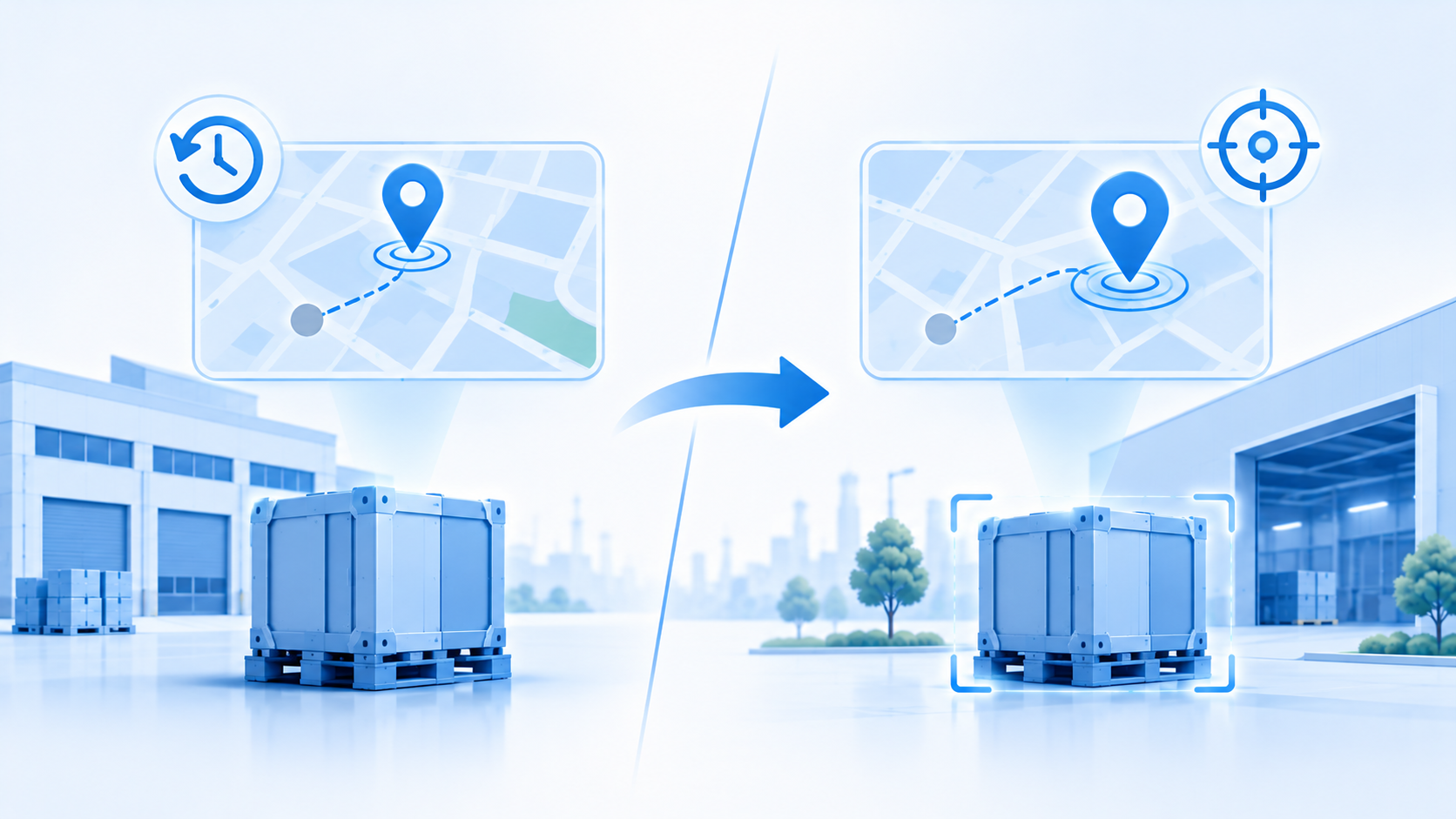
Both matter, and they answer different questions. Historical asset location shows where an asset has been, while current asset location shows where it is now.
| Historical location | Current location | |
|---|---|---|
| Question it answers | Where was this asset, and who had it? | Where is this asset right now? |
| Typical source | Transfer records, movement log, timestamps | Latest transfer, latest scan or live tracking device |
| Main use | Audit trail, accountability, investigating losses | Finding equipment, physical verification, daily operations |
A business with only historical records can reconstruct what happened but may not be able to find the asset. A business that knows only the current location has no trail to explain how it got there. Good asset records keep both.
Why Does Knowing an Asset's Current Location Matter?
When the recorded location matches reality, a business can:
- Find equipment quickly instead of spending time searching for it
- Avoid buying items it already owns
- Prevent assets from going missing without anyone noticing
- Hold the right person or department accountable for each asset
- Complete physical verification and audits with less effort
What Problems Do Outdated Asset Location Records Cause?
Employees move between departments, equipment gets transferred between branches and machines are shifted across factory floors. If these movements are not recorded, the information quickly becomes outdated. The result is more than a paperwork problem:
- Wasted time: employees search for equipment that is not where the register says it is.
- Duplicate purchases: companies buy items they already own but cannot locate.
- Difficult audits: the physical location does not match the recorded location, so verification takes longer and exceptions pile up.
- Unclear accountability: nobody can say who last had the asset.
- Unaccounted assets: items stay in the register long after they have been misplaced, lent out or lost. Our article on what happens when your fixed asset register and reality disagree looks at the financial side of this.
For a business with hundreds of assets, these small gaps can add up quickly.
How Can Businesses Track Asset Movements?
Asset movement can be tracked in several ways. The right choice depends on the type of asset, how often it moves and how precisely its location needs to be known. For a detailed comparison, read our guide to barcode, QR, RFID or GPS tracking.
Barcode and QR Code Tracking
Each asset receives a unique tag. Employees scan it when issuing, transferring or verifying equipment. This is a practical option for offices, warehouses and routine audits.
RFID Tracking
Radio frequency identification allows tagged assets to be detected by RFID readers, often without scanning each item one by one. It can make checking large numbers of items faster, particularly in warehouses and industrial facilities. Industry bodies such as GS1 publish standards for this technology, for example the EPC UHF Gen2 RFID standard.
GPS Tracking
GPS devices help monitor the location of vehicles and other mobile assets over wider geographical areas.
Digital Asset Management Systems
Whichever tag is used, a digital asset register is where the information is stored: the asset, its current location, who is responsible and the full history of movements.
One important point: not every tracking method provides live updates. A QR code scan tells the system where an asset was scanned, not necessarily where it is at every moment. Likewise, real-time tracking is not always necessary. A laptop may only need its location updated when it changes hands or moves to another office, while a delivery vehicle may need frequent GPS updates. Businesses should choose a method based on actual requirements rather than investing in technology they may never use.
What Should Happen When an Asset Is Transferred?
When an asset moves between departments, branches or locations, the register should change at the same time. A good transfer record captures:
- The asset ID and what is being moved
- The location and person or department it is moving from and to
- The date and time of the movement
- Who authorised and who received it
- The reason and, where relevant, the asset's condition
If an asset is moved without updating its records, the asset register may show an incorrect location, creating confusion during audits and inspections. Recording the transfer, instead of leaving it in an email conversation or an unreported handover, keeps the trail complete.
How Do Ownership and Accountability Fit In?
Location tells you where an asset is. Ownership tells you who is responsible for it. Assigning a named custodian to every asset makes it clear who to ask when an item cannot be found, and prompts an update whenever responsibility changes. Employee exits, role changes and branch moves are typical moments when custody should be reviewed and re-assigned.
How Does Accurate Location Data Simplify Physical Verification and Audits?
Physical verification means checking that assets in the register actually exist and are where they are recorded. When location records are up to date, auditors can use them to find assets and verify their existence more efficiently. A typical cycle is to schedule the check, scan or inspect assets location by location, compare the findings with the register and investigate any exceptions. Regular, smaller checks usually work better than one large annual exercise.
What Does Asset Tracking Look Like in Different Businesses?
- Manufacturing companies: machines and tools are shifted between production lines, plants and maintenance bays. Recording each move keeps maintenance, depreciation and insurance records tied to the right asset. See also from reactive maintenance to asset intelligence.
- Offices: laptops, monitors and phones are issued to employees, taken home, swapped and returned. Employee-wise assignment and scan-based verification keep this manageable.
- Warehouses: handheld scanners, forklifts, racking and pallets move constantly. Barcode or RFID scanning at the point of movement keeps records close to reality.
- Multi-location businesses: assets travel between branches, and items in transit can disappear from everyone's records. A shared, central register with transfer records makes the movement visible to every location.
Assets that benefit most from location tracking are generally mobile equipment, IT devices, tools, machinery and shared company assets.
What Are the Common Asset Tracking Challenges?
- Employees forget or skip updating the register after a move.
- Different branches keep separate spreadsheets that do not agree.
- Tags get damaged, removed or never applied to older assets.
- Transfers happen informally, without approval or a record.
- Verification is done rarely, so errors build up unnoticed.
- The asset register is not connected to accounting, so financial records and physical reality drift apart.
How Does Fixed Asset Management Software Help?
Asset tracking software should make it easy to maintain accurate records without creating extra work for employees. Useful capabilities to look for include:
- A central database holding asset details and locations
- Unique QR codes, barcodes or RFID identification
- Easy recording of asset transfers and assignments
- Mobile scanning for physical verification
- Reports showing missing, misplaced or unverified assets
When asset movements are recorded digitally, the system can keep a history of location changes, transfers and movement timestamps. Instead of relying on memory or scattered emails, teams can see the full trail for any asset. When tracking is connected to a broader fixed asset management system, the same information can also support audits, depreciation records and financial reporting. Our complete guide to fixed asset management software explains the wider picture, and our article on how depreciation works for fixed assets shows why accurate asset records matter for the accounts.
For a small office, a spreadsheet and occasional physical checks might be enough. Enterprise asset tracking is a different challenge: several branches, warehouses and factories, with thousands of assets moving between them. A centralised system helps different teams work from the same information instead of maintaining separate records.
Where Bigsun FAS Fits
Bigsun Technologies builds ERP and business software for growing businesses, including its Financial Accounting Software (FAS), which brings payments, receipts, bank reconciliation and statutory reports into one system. Keeping asset records close to the accounts helps finance teams work from the same information as the people who manage the assets. Manufacturers can also explore Bigsun Manufacturing ERP, and businesses that want a wider connected system can look at Bigsun ERP software.
If asset movement and location records are a challenge in your business, ask for a demonstration using your own scenarios: how a transfer between branches is recorded, how movement history is viewed and how physical verification is supported. You can contact the Bigsun team to arrange this.
Final Thoughts
A company does not just need to know where an asset was when someone last updated a spreadsheet. It needs a dependable way to keep track of where that asset is now and who is responsible for it.
That does not always require expensive real-time technology. Sometimes a simple scanning process and disciplined record-keeping make a significant difference. What matters is closing the gap between what the asset register says and what is actually happening on the ground. That is when asset tracking becomes genuinely useful.
Related Reading
- Barcode, QR, RFID or GPS? The Right Tracking Technology Depends on the Asset
- The Asset Nobody Can Find: What Happens When Your FAR and Reality Disagree?
- Fixed Asset Management Software: Complete Guide for Enterprises
- How Depreciation Works for Fixed Assets