
Your Balance Sheet Has Assets. But Does Your Floor?
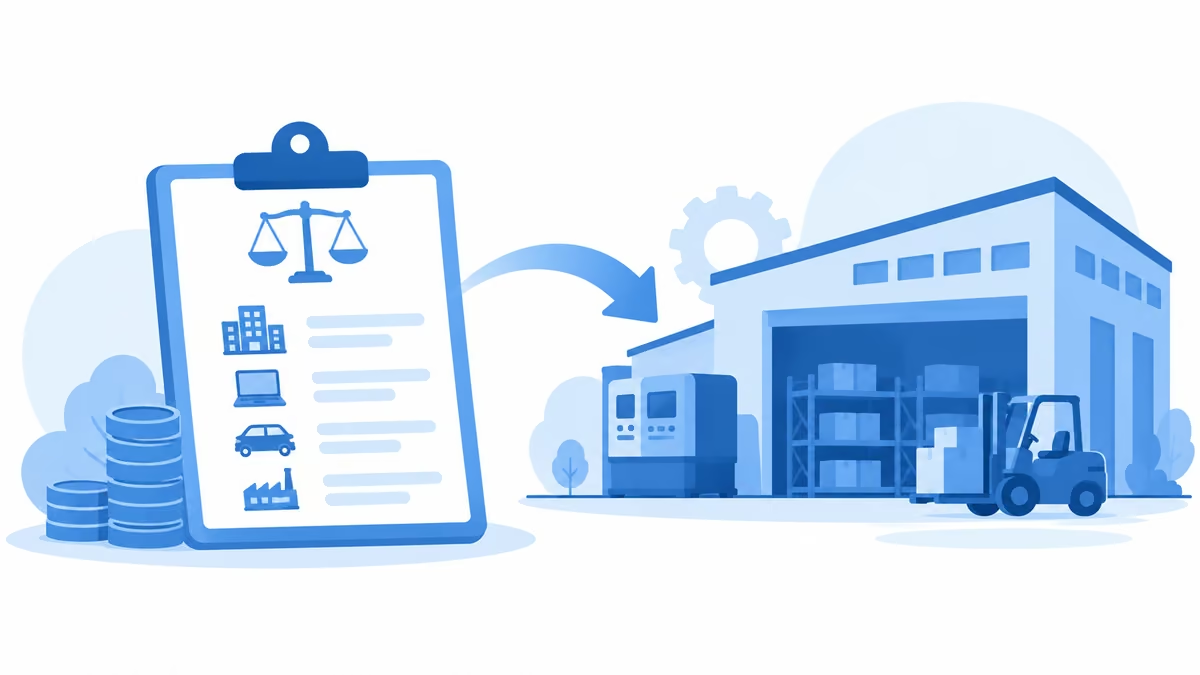
A manufacturing company might have hundreds of machines, tools, vehicles and pieces of equipment recorded in its accounts. On paper, everything looks perfectly organised. But walk through the plant or warehouse, and the picture can be very different. Some equipment has moved to another line or plant, some is damaged, some is idle and some no longer exists. Yet all of it may still sit in the asset register as though nothing has changed.
This raises an important question: does your business know what it owns, where those assets are and whether they are actually being used?
Answering that is the core of manufacturing asset management: keeping the asset register, the physical equipment and the maintenance record telling the same story. This article shows where they drift apart in Indian plants, and how manufacturers close the gap.
Quick answer: A balance sheet shows what a manufacturer owns financially. It does not confirm that each machine is present, identifiable and usable on the factory floor. The gap between recorded assets and real assets leads to lost equipment, idle machinery, unexpected purchases and higher maintenance costs. Manufacturers close the gap by tagging and tracking physical assets, measuring utilisation, using maintenance data and keeping one centralised record across finance and production.
What is the difference between financial records and physical assets?
A balance sheet tells a business what it owns financially. It does not necessarily confirm that every physical asset is present and accounted for. Financial assets appear in accounting records, while operational assets are the physical resources actually used in production.
For example, a manufacturing company may have 200 machines listed in its fixed asset register. After years of transfers, replacements, repairs and disposals, the number of machines actually on the factory floor could be different. Without regular checks, these differences go unnoticed.
| Question | What the books say | What the floor needs to know |
|---|---|---|
| Does it exist? | Listed in the register | Physically present and identifiable by its tag |
| Where is it? | Plant or location recorded at purchase | Current plant, line and bay |
| What is it worth? | Cost, accumulated depreciation, net block | Condition and remaining useful output |
| Is it being used? | Not shown | Operating hours, output and downtime |
| Who is responsible? | Cost centre | The supervisor or maintenance owner |
This is why fixed asset verification matters. It means physically checking assets and comparing what exists with what the records say the company owns. Fixed asset reconciliation then investigates and corrects the differences so that financial records reflect the real position.
What goes wrong between the books and the floor?
Managing production assets involves more than recording their purchase prices. Manufacturers must also keep track of location, condition, ownership and movement for machinery, tools, dies, moulds, fixtures and other production assets. When these records are not maintained, common problems appear:
- Missing equipment: assets are misplaced, transferred between lines or plants, or sent for repair or job work without the records being updated.
- Duplicate entries: the same asset appears more than once in the register.
- Unrecorded disposals: machines that were sold or scrapped still appear in the financial records.
- Unexpected purchases: the company buys equipment it already owns because nobody knows where the existing unit is.
- Poor accountability: without tracking, it is hard to tell who is responsible for an asset.
Consider a manufacturer that urgently needs another press for a new order. Production raises a purchase request. Meanwhile an identical press, bought four years earlier for another plant, has been idle in a corner for months and is recorded under a department that no longer uses it. The new purchase is made, and the old press continues to attract depreciation, space and insurance cost. The scenario is illustrative, but this kind of loss is common where physical and financial records do not meet.
These issues affect financial reporting, budgeting, insurance and day-to-day production planning. Poor asset management raises production costs through equipment losses, unexpected repairs, idle machinery and unnecessary spending.
How can manufacturers identify and track production assets?
Knowing that the company owns 50 machines is one thing. Knowing where each one is, what condition it is in and who is responsible is another. Fixed asset tracking helps manufacturers monitor the location and movement of their equipment, and asset tracking software for manufacturing can automate much of that work. A workable approach has four parts:
- Tag every asset when it is received. Barcodes, QR codes and RFID tags make each machine, tool or fixture uniquely identifiable. Our comparison of barcode, QR, RFID and GPS asset tracking explains which technology fits which asset.
- Record location at a useful level. Plant, shop floor, line or bay, not just "factory".
- Record movement when it happens. A transfer between lines or plants should update the asset's record immediately.
- Verify regularly. Check that listed assets are present, correctly identified and in the expected condition.
Software that brings asset information into one place makes it easier to identify equipment, update locations, record transfers and monitor details. Some systems also support barcode or QR scanning, automated reporting and verification workflows, which is valuable for manufacturers with large inventories of tools and equipment.
How do you measure equipment utilisation and find idle machinery?
Manufacturers can find underutilised equipment by monitoring machine usage, operating hours and production output. Asset utilisation can be measured by tracking:
- Operating hours against available hours.
- Production output compared with rated capacity.
- Downtime and its reasons.
- Equipment availability when production needs it.
Idle and underutilised machinery is not harmless. It continues to depreciate, occupies space, may need insurance and ties up capital. Once it is visible, a manufacturer can redeploy it to another line or plant, rent it out, sell it or retire it, and avoid buying a replacement it does not need. If these numbers sit only in production reports and not in the asset record, finance cannot see them. Linking the two is what turns asset tracking into better decisions.
Where do predictive maintenance and AI-based equipment monitoring fit?
Predictive maintenance helps manufacturers maintain equipment before minor issues turn into costly failures. Where machines have sensors or controllers that report run-hours, temperature, vibration or output, AI-based tools can analyse that equipment data to monitor performance and flag patterns that suggest a maintenance need. The aim is to plan repairs before a breakdown, instead of reacting after production has stopped.
This only works if the data is tied to the right asset. An alert on a machine is useful when the system knows exactly which asset it is, where it sits, how old it is and what has already been repaired. That is why reliable asset identity and history come first. Monitoring tools depend on them. Fewer unplanned stoppages also mean lower maintenance and production costs.
The benefits depend on the equipment being instrumented and on good data. To go deeper, read From Reactive Maintenance to Asset Intelligence, Using AI to Reduce Unplanned Downtime in Manufacturing and How AI Helps Manufacturers Extend Machine Life.
What is asset lifecycle management in a factory?
Asset lifecycle management follows an asset from the day it is acquired to the day it is retired. For a production asset, the stages are:
- Acquire: purchase, receipt and capitalisation.
- Commission: installation, testing and the date it becomes ready for use.
- Operate: daily use, with hours and output recorded.
- Maintain: preventive and corrective work, with costs and downtime recorded against the asset.
- Transfer: moves between lines, plants or custodians.
- Retire: sale, scrapping or write-off, ending depreciation correctly.
When each stage is recorded against one asset record, decisions get easier. A manufacturer can compare cumulative maintenance cost with the asset's remaining book value and output, and decide whether to repair, overhaul or replace.
How does centralised visibility help manufacturers?
In many plants, finance holds the register, maintenance holds service history, stores hold tools and production holds utilisation data. Centralised, digital asset records bring these together so that every team looks at the same asset. Manufacturers can then:
- Locate equipment quickly and see its availability.
- Prevent loss and avoid unnecessary purchases.
- Compare the register with physical verification and reconcile differences.
- Connect maintenance, downtime and utilisation to the financial record.
- Improve accountability by showing who is responsible for each asset.
Bigsun's Manufacturing ERP and Financial Accounting Software (FAS) are built to keep production and accounting records connected. For the finance side of the same issue, see The Asset Nobody Can Find, or talk to the Bigsun team about your plants.
Where should a manufacturer start?
- Pick one plant and compare its asset register with a physical walk-through.
- Tag every machine, tool and fixture with a unique identifier.
- Correct the register for missing, duplicate and disposed assets.
- Start recording transfers and maintenance against each asset.
- Add utilisation data for the machines that matter most to output.
- Repeat verification at planned intervals and extend to other plants.
Digital asset management helps manufacturers improve operational efficiency and financial accountability: records match the floor, idle assets are found before new ones are bought, and maintenance is planned rather than forced.
Final thoughts
A company may have an impressive balance sheet, but that does not automatically mean its physical assets are properly accounted for. Manufacturing asset management and fixed asset management help bridge the gap between what a business records and what it actually owns. Through accurate registers, regular verification, effective tracking and reconciliation, manufacturers gain better control over equipment and reduce avoidable losses.
Because ultimately, knowing what your business owns is important. Knowing where it actually is matters just as much.
If you run plants and want your asset register, equipment and maintenance records connected, see Bigsun's Manufacturing ERP, or talk to the Bigsun team. You can also read how ERP software for the manufacturing industry fits in.
See how manufacturers keep the books and the floor in step
Talk to the Bigsun team about connecting production, maintenance and accounting records across your plants.