
How AI Can Improve First-Pass Yield in Manufacturing
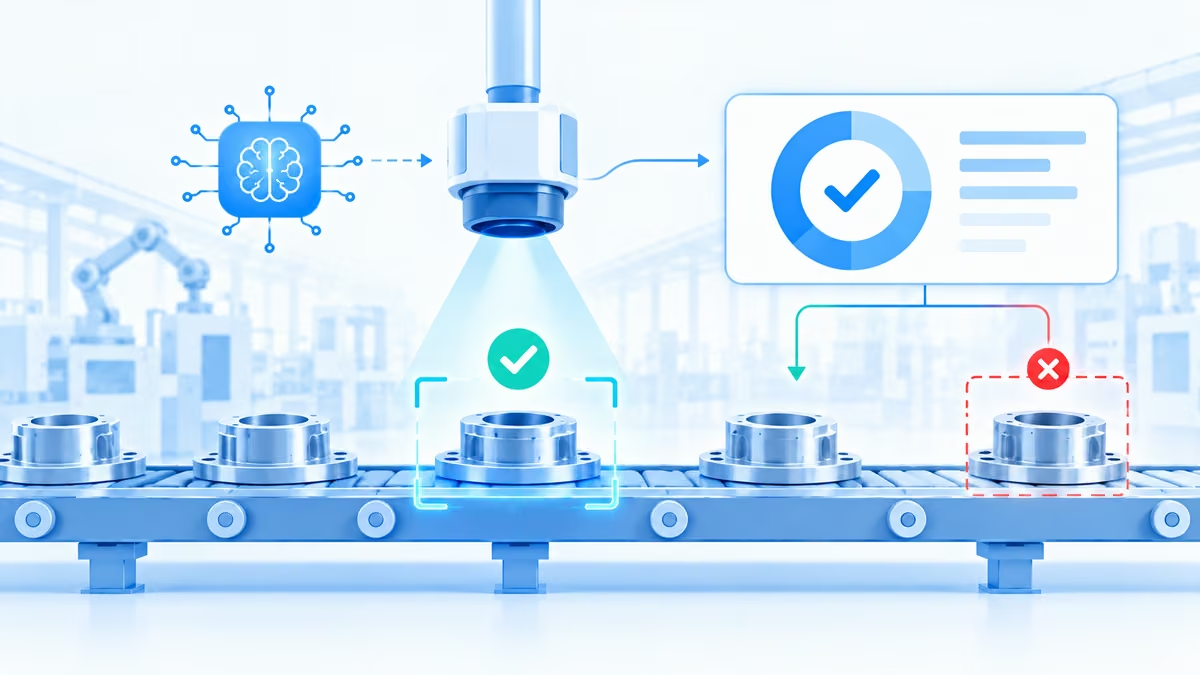
Picture a factory that makes 1,000 units in a day. In an ideal world every unit comes off the line correctly, with no repair, no adjustment and no second visit to the workstation. In reality, a share of those units usually needs fixing before it can be shipped. That share is time, material and labour spent twice on the same product.
Plant heads and quality managers track this with one number: first-pass yield in manufacturing. It tells you how much of your output is right the first time, and it is one of the clearest windows into how healthy a process really is. Artificial intelligence (AI) is increasingly used to push that number up, not by replacing inspectors or engineers, but by spotting problems sooner, linking defects to their causes and giving teams better information to act on.
This guide explains what first-pass yield is, how to calculate it, where AI helps, and how it works together with Manufacturing ERP software so the improvements are measured and sustained rather than one-off.
What Is First-Pass Yield?
First-pass yield (FPY) is the percentage of units that complete a process step, or the whole process, correctly the first time without rework, repair or scrapping. Many plants also call this “first time right”.
First-pass yield formula
The basic first-pass yield formula is:
FPY (%) = (Units that pass first time ÷ Total units started) × 100
If 1,000 units enter a process and 900 pass inspection without any rework, the FPY is 90%. The 100 remaining units either went through rework or were scrapped, and both outcomes cost money.
First-pass yield vs. overall yield
Overall yield counts every good unit that eventually leaves the line, including those that were repaired. First-pass yield counts only the units that were good without being repaired. A plant can show a healthy final yield while hiding a heavy rework loop behind it, which is why FPY is the more honest measure of process quality.
First-pass yield across several steps
Most products pass through several operations such as cutting, machining, assembly, testing and packing. If each step has its own FPY, the combined figure for the whole route (often called rolled throughput yield) is the product of the step yields. Five steps at 97% each give roughly 86% for the full route. Small losses at every stage add up quickly, which is why improving FPY step by step matters more than it first appears.
Why Low First-Pass Yield Hurts the Business
A low FPY rarely shows up as a single dramatic failure. It shows up as a steady drain:
- Extra labour: operators and technicians spend shift time repairing units instead of building new ones.
- Material loss: scrap and over-consumption of raw material that was never planned for.
- Capacity loss: machines are occupied reprocessing the same job, so planned output slips.
- Delivery risk: rework loops push orders past their promised dates.
- Customer trust: the more units are repaired, the greater the chance something is missed and reaches the customer.
Improving first-pass yield is therefore not only about catching defective products at the end. It is about preventing defects from being made in the first place.
How AI Helps Improve First-Pass Yield
AI is not one tool. In a plant it usually appears as a handful of practical capabilities, each tackling a different cause of lost yield.
1. Detecting problems earlier on the line
Cameras combined with image-analysis software can examine products as they move through a station and flag scratches, cracks, missing components, wrong labels or incorrect assembly. The earlier a fault is flagged, the fewer faulty units are produced behind it. If a fixture drifts out of position at 10 a.m., an alert within minutes is far cheaper than discovering the problem during end-of-shift inspection. For a deeper look at this capability, read our guide on how computer vision helps manufacturers detect product defects.
2. Finding the real cause behind repeat defects
Fixing a defective unit does not stop the next one. Teams often fix the same defect for weeks because nobody can see what it correlates with. AI models can compare defect records with machine settings, shift, operator, tool, material batch and maintenance history to surface patterns a person scanning spreadsheets would not easily see.
For example, a plant might find that a particular seal defect clusters on one machine, on night shifts, using one supplier’s material lot. That gives engineers a specific place to start. The finding still needs to be verified by people who understand the process, and our article on AI for root cause analysis in manufacturing explains how this works in practice.
3. Watching machine condition during production
Quality problems often begin as equipment problems: a spindle running slightly warm, a press with changing vibration, a filling head that is drifting. AI-based monitoring can learn what “normal” looks like for a machine and alert the team when readings move away from it. Catching drift early protects yield and also reduces surprise stoppages. We cover this side in detail in using AI to reduce unplanned downtime in manufacturing.
4. Keeping inspection consistent
People are excellent at judgement but get tired over a long shift, and two inspectors may judge a borderline unit differently. Automated inspection applies the same criteria to every unit. That consistency makes your FPY data more trustworthy, because the number reflects the process rather than who happened to be on duty.
5. Supporting faster, better decisions
When defects suddenly rise, the first hours matter. AI-assisted dashboards can bring together inspection results, machine readings and batch information so supervisors see likely suspects at once instead of chasing data across departments. The decision on what to change stays with your engineers and quality team.
Where ERP Fits In
AI needs reliable data, and that data has to be linked to the way the plant actually runs. This is where an ERP system becomes the backbone of any first-pass yield programme.
- Work orders and routings: tell you exactly which operations, machines and materials a unit passed through.
- Batch and lot traceability: connects a defect back to the raw material lot or supplier.
- Inventory and scrap booking: shows what rework and rejection really cost in material and value.
- Maintenance records: link equipment condition to quality outcomes.
- Reports and dashboards: make FPY visible by product, line, shift and period.
Bigsun Manufacturing ERP brings production planning, plant maintenance and inventory into one connected system, so these records sit together instead of in separate files. Where you already use inspection cameras, sensors or analytics tools, the APIs and integrations available with Bigsun can help connect their output with ERP records. The exact scope depends on your plant and systems, which is best discussed with our team. Our overview of how AI-powered ERP is changing manufacturing management gives more context.
A Practical Plan to Improve First-Pass Yield with AI
Step 1: Measure your baseline honestly
Pick one product family or line and calculate FPY for a few weeks using the formula above. Count every rework event, including quick fixes done at the workstation that never make it into a report. If those fixes are not recorded, the first improvement is simply to start recording them.
Step 2: Rank defects by cost, not count
List defect types and attach a rough cost to each: labour minutes, material lost, machine time and delay risk. A frequent cosmetic defect may matter less than a rarer one that forces scrapping. A simple Pareto view usually reveals that two or three defect types drive most of the loss.
Step 3: Choose the right AI use case
- Visible defects that are hard to inspect manually: start with vision-based inspection.
- Defects that come and go with no obvious reason: start with data analysis across machine, batch and shift records.
- Defects that follow machine wear: start with condition monitoring.
Step 4: Pilot on one line
Run the pilot on a single line, with a clear target such as “reduce rework on this product by a measurable amount over eight weeks”. Keep the existing manual checks running in parallel until you have confidence in the new alerts.
Step 5: Close the loop
An alert is only useful if someone acts on it. Define who receives it, what they check first and how the outcome is recorded. Workflow approvals and maker-checker controls in your ERP can help formalise this, and our business process automation capabilities are built for exactly this type of structured follow-up.
Step 6: Review and expand
After the pilot, compare FPY, rework hours and scrap value with the baseline. Expand only what the numbers support.
Common Mistakes to Avoid
- Buying AI before fixing data capture. If defects and rework are not recorded consistently, models have nothing reliable to learn from.
- Treating the model as the final authority. AI findings are leads to verify, not conclusions.
- Starting too big. A plant-wide rollout makes it hard to tell what worked.
- Ignoring operators. The people on the line know which defects “always” happen on a certain machine. Involve them early.
- Chasing the percentage alone. Redefining what counts as rework can inflate FPY without improving anything. Keep definitions stable.
Benefits of Improving First-Pass Yield
- Less rework: more units pass the first time.
- Lower waste: fewer materials lost to preventable defects.
- Better use of capacity: machines and people produce new output instead of repeating work.
- More reliable delivery: fewer surprises close to dispatch.
- Stronger quality records: traceable data supports audits and customer discussions.
The size of the gain depends on your starting point and process. AI will not remove every defect, but a measured, step-by-step approach gives you evidence for where it pays off.
Final Thoughts
A factory becomes more efficient when products are made correctly the first time. First-pass yield is the number that shows how far you are from that goal, and AI helps by detecting problems sooner, revealing repeat causes and supporting quicker decisions. Combined with experienced people and a connected ERP that records what happened on every order, it gives manufacturers a practical route to fewer defects, less rework and more predictable output.
If you would like to see how production, quality and maintenance records can sit together for your plant, you can explore Bigsun Manufacturing ERP or talk to our team about your requirements. You may also like our article on how AI helps reduce manufacturing defects and rework.